

Has AI helped or hindered the way you work, play and feel?
That is a very big question!. So let’s make it smaller. Right now, while you read these words, is AI helping or hindering you?
For me, AI can be an Alice in Wonderland enabler. The possibilities! There are millions more rabbit holes to open, explore and get lost in. Then you pop up in a completely new wonderland with nothing finished.
Do you relate?
This article asks a second big question as well. Should your organisation have a Reconciliation Action Plan? We will get there, but first, a short detour.
Why I took up pen and paper
That is why I have taken to a prehistoric practice: writing by hand.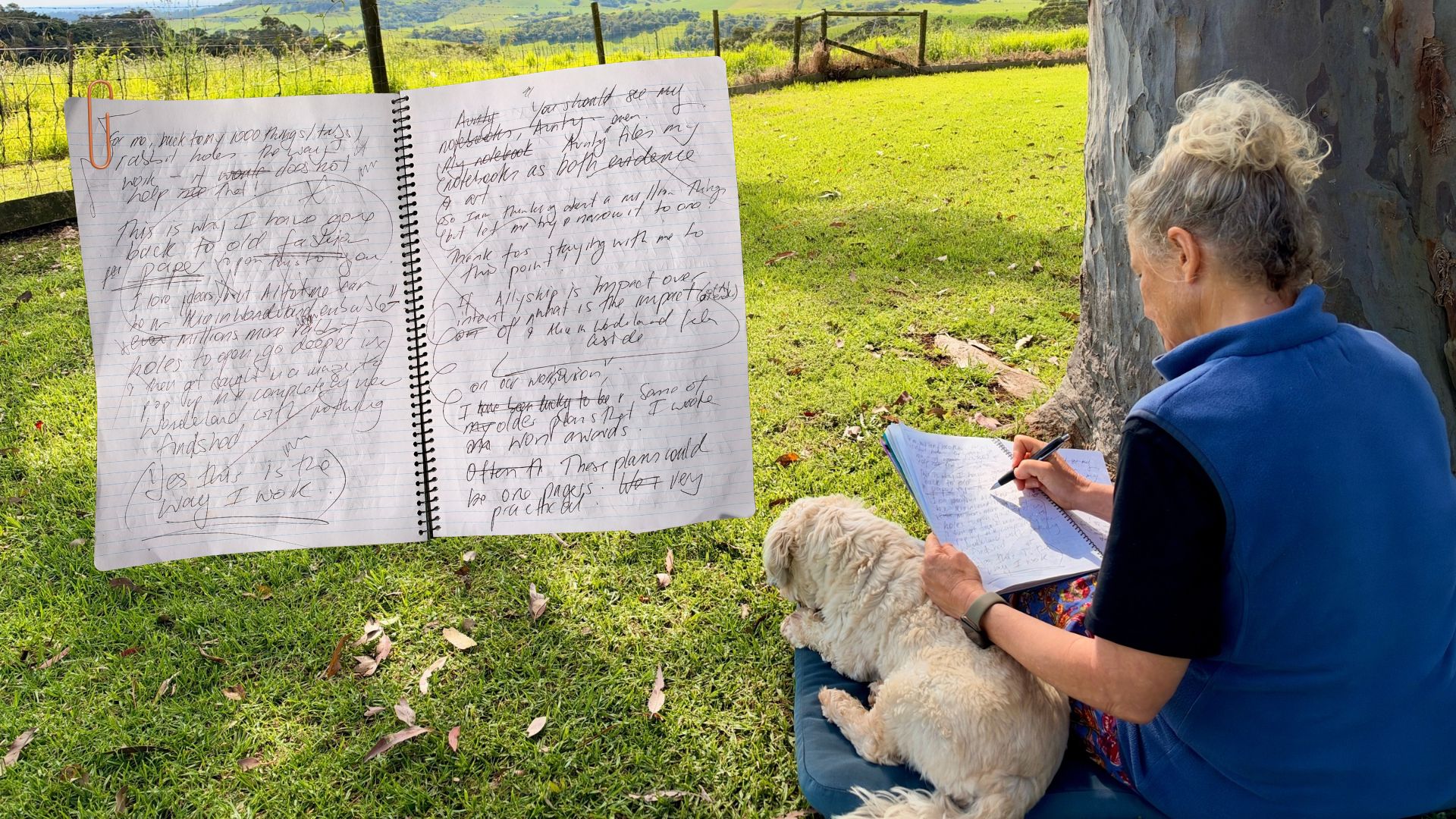
Aunty Munya keeps my notebooks and eagerly awaits the next completed edition. I am not sure why. Only Aunty can tell.
In fact, the whole business has been rather cathartic. A pen cannot open another tab.
Do you ever pine for the pre-AI days? Vinyl, Walkmans, corded phones, the smell of coconut oil, Hey Hey It’s Saturday. I digress. See? Rabbit holes.
AI, allyship and impact over intent
I also wonder about the impact of AI on allyship and Reconciliation.
Allyship is about impact over intent. I promise my intent is honourable and earnest, even as I open more rabbit holes. However, good intent is not the measure. Impact is.
So it is worth asking: what is the impact of how we use AI on the people we work with and for?
Reconciliation Action Plan: to RAP or not to RAP?
We have great conversations with our partners about whether to RAP or not.
Is it the best use of resources? Will it just end up another dust collector, all words and no action?
These are fair questions. Instead of rushing to a yes or no, we come back to our approach.
Start with the what, why and who before the how
At Evolve, we use our Songlines Pathways approach. As we share in Chapter 8 of Practical Reconciliation:
“We find that the biggest blunders can happen (in lots of situations, not just engagement), when people jump to the How or a solution, without thinking through the What, Why and Who first. This can land you in a ‘square peg in a round hole’ situation.”
The same advice applies to a Reconciliation Action Plan. With our co-design approach, we work through the Why, Who and What before deciding on the How.
A RAP may be the way to go. It may not.
Here is the order we follow:
- Why do we want a plan?
- Who needs to be part of shaping it?
- What do we want to change?
- How comes last, and a RAP may or may not be the answer.
Why the best plans can fit on one page
Back in the day, award-winning plans that community and I created were often one page. They followed one simple pattern:
We will do this, to achieve that, and we will know we are successful when x is happening.
Sometimes we did not start action two until action one was done.
Simple plans are easier to follow and easier to share. A clear plan is also harder to leave gathering dust.
Questions to sit with
You do not need to answer these today. Simply notice what comes up.
- Has AI helped or hindered the way I work, play and feel today?
- Have we asked why, who and what before we decided on how?
- How will we know our plan is working?
If one question feels uncomfortable, stay with it for a moment. After all, that discomfort often points to where the learning is.
Take it back to pen and paper
Try this. Grab a pen and a piece of paper, set the timer for two minutes and write non stop.
How did that feel? What happens when you cannot open another tab?
If you got this far without a rabbit hole, or without opening another one, too Deadly!




Recent Comments