
National Reconciliation Week is rapidly approaching, and many workplaces are beginning to plan their activities.
For many leaders and teams, there is a genuine intention to approach the week with care, respect, and deep meaning.
However, alongside that positive intention, there is often something else: pressure.
Specifically, people feel the pressure to get it exactly right. Furthermore, they feel the burden to say the correct things and create something truly meaningful.
Underneath all of that, a quieter question remains: Who is actually carrying the load?
The Pressure Behind National Reconciliation Week
In many organizations, the responsibility for National Reconciliation Week activities falls to a very small group of people. Typically, this dedicated group includes:
-
First Nations staff members
-
RAP (Reconciliation Action Plan) leads or committees
-
Individuals who are already deeply committed to the work
Clearly, this situation is rarely intentional. Consequently, it can quickly create “cultural load.” Essentially, this term describes the additional responsibility of educating, guiding, or carrying the work of Reconciliation within the organization. Alternatively, some people describe this as “colonial load.“
Regardless of the term used, the impact remains the exact same, because the workload is not shared evenly among the team.
What the “All In” Theme Really Means
Importantly, the 2026 theme invites something much deeper than basic participation. In fact, going “All In” is not simply about doing more tasks during one specific week.
Instead, this powerful theme is about:
-
Sharing responsibility evenly across the entire organization
-
Building capability and knowledge beyond a small core group
-
Creating the confidence to engage with Reconciliation throughout the whole year
A Practical Place to Start Your Planning
Therefore, rather than jumping straight into activity planning, you should start with reflection. To do this effectively, sit down with your team and ask:
-
What are we hoping National Reconciliation Week will mean for us this year?
-
How are we effectively sharing the responsibility for this week?
-
What specific role can each of us play to carry this work well?
Furthermore, to better understand cultural load and how it frequently shows up in workplaces, you can explore this helpful article: Ever Wondered What Cultural Load Really Means?.
Additionally, many organizations plan around significant dates such as National Reconciliation Week and NAIDOC Week. Fortunately, tools like Evolve’s calendar can easily support that important planning.
Yet, going “All In” ultimately asks something more. Specifically, it asks:
How do we carry this vital work far beyond the calendar?
Creating the Conditions for Learning
At Evolve, we always begin with a very simple principle:
No shame. No blame. No guilt.
We use this approach because people learn best when they feel completely safe to engage. Ultimately, Reconciliation is not a single event. Rather, it is an ongoing practice firmly grounded in shared responsibility.
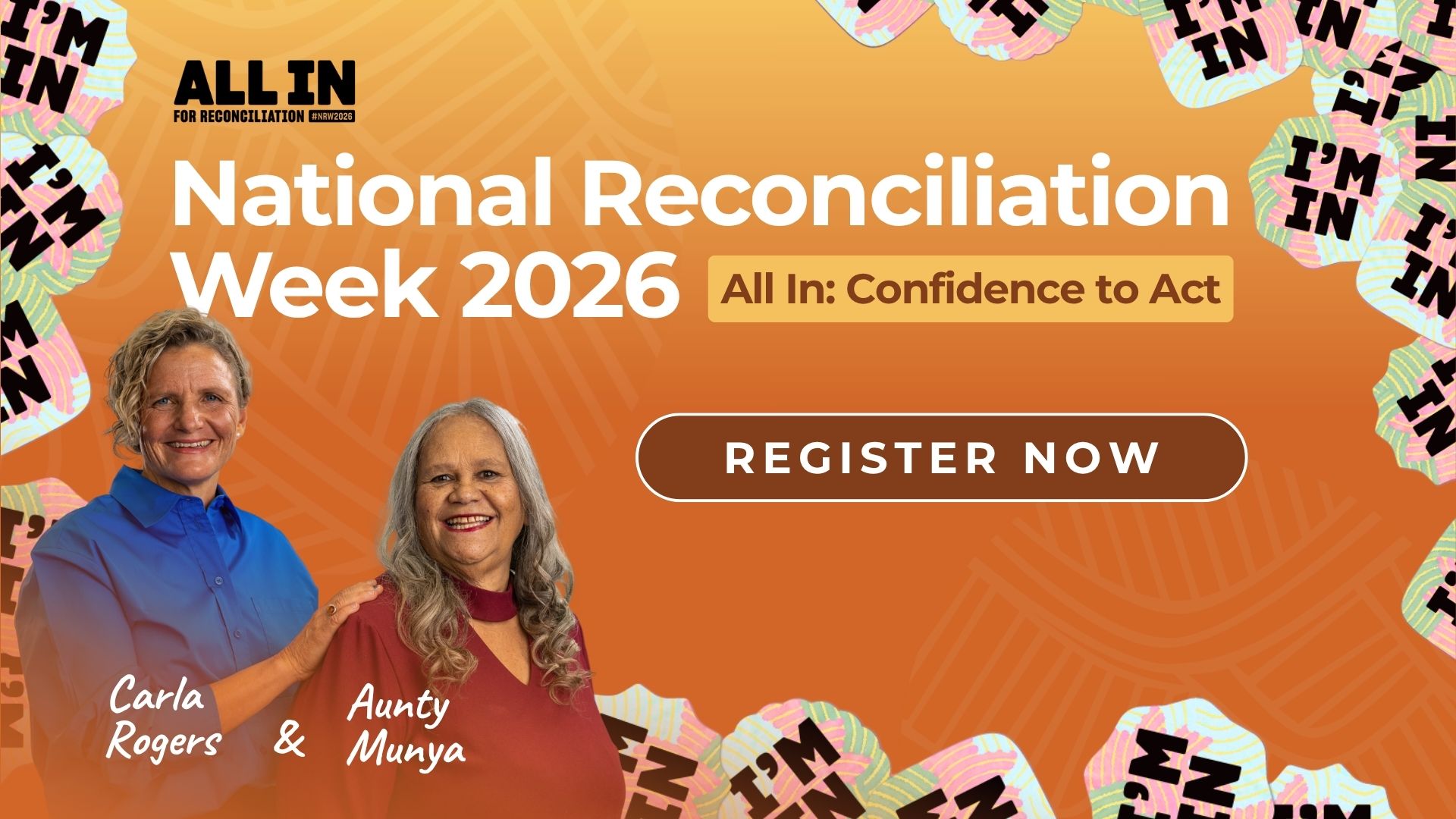
Join our webinar for National Reconciliation Week 2026

Recent Comments