

As National Reconciliation Week approaches in less than a week, workplaces across Australia are finalising their plans.
There may be a book club, a movie screening, a walk on Country, a guest speaker… or, of course, a morning tea.
And don’t get us wrong—there is absolutely nothing wrong with a morning tea. Aunty, for one, loves them. What we don’t want, though, is for National Reconciliation Week to become a purely symbolic exercise while the harder, more meaningful conversations are left untouched.
Because the real work of Allyship and Reconciliation is mostly what happens after the morning tea.
What Does the “All In” Theme Look Like in Practice?
Over the past month, we’ve explored what this year’s National Reconciliation Week theme, “All In,” truly looks like in practice. To move beyond surface-level initiatives, we’ve asked some important questions:
-
Who is carrying the load? Who is responsible for the work of Reconciliation in organisations? Is the cultural load being shared, or is it quietly left to a few First Nations people?
-
Intention vs. Impact: What is the difference between having good intentions and creating a real impact? How do we stay open and receptive when we get things wrong?
-
Navigating Disagreement: How do we engage respectfully with people we disagree with—and those who disagree with us?
-
Building Safe Workplaces: How do we create environments where people can ask questions, reflect honestly, repair mistakes, and continue learning?
If we cannot talk honestly about racism, cultural load, discomfort, and the fear of getting it wrong, then Allyship risks becoming performative instead of a daily practice.
The Danger of Disengagement in Workplace Allyship
That tension is becoming more visible across Australia. In recent months, many organisations have told us they feel increasingly uncertain about how to approach Reconciliation publicly. Some worry about backlash, some fear saying the wrong thing, while others have quietly scaled back their activities altogether.
At the same time, many First Nations staff, RAP (Reconciliation Action Plan) leads, and Allies are carrying increasing emotional labour as they try to keep these crucial conversations moving forward.
The danger here is not only racism; it is disengagement—people quietly stepping away from the conversation altogether. Increasingly, many Australians are questioning whether Reconciliation is becoming symbolic rather than practical, resulting in performance without honest conversation.
Why Being “All In” Matters
This is exactly why the “All In” theme matters so much. Not because it asks us to be perfect, but because it asks us to stay engaged in the conversation.
To keep learning.
To keep listening.
To keep showing up with humility, courage, and care.
At Evolve, we believe the ultimate goal is not perfection. It is confidence—the confidence to navigate hard conversations without shame, blame, or guilt, and the confidence to turn good intentions into practical action all year round.
Going Deeper After the Morning Tea
Yes, we will celebrate National Reconciliation Week. There will absolutely be cuppas involved. Possibly even a song or two (Beds Are Burning with the audio off… we promise).
But we also want to go deeper. Because being “All In” means:
-
Being willing to learn, act, repair, and share responsibility together.
-
Learning how to sit with discomfort instead of shutting down.
-
Not outsourcing the hard conversations to First Nations people alone.
-
Building workplaces where Allyship is measured by consistent practice, not just performance.
If your organisation wants National Reconciliation Week to be more than just a symbolic moment, we would love to yarn with you this year.
After all, the real work begins after the morning tea.
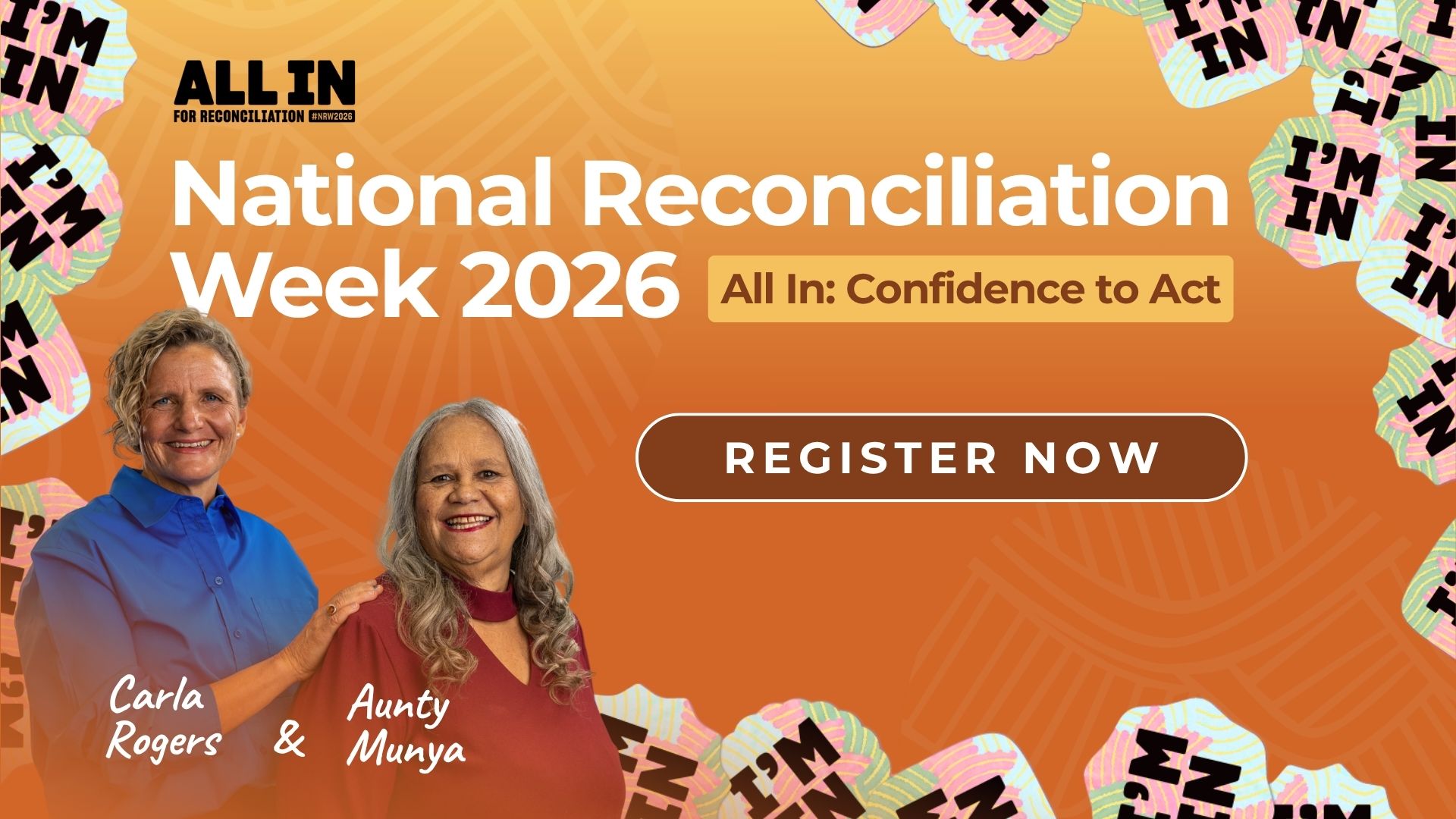
Explore NRW 2026 webinar options here

Recent Comments