

Difficult conversations need more than information
During National Reconciliation Week, Evolve’s focus was on difficult conversations.
How do we have them well? What holds us back?
How do we move beyond symbolic gestures towards meaningful Reconciliation action?
Across webinars, workshops, media interviews and conversations with our Reconciliation partners and Accredited Allies, we explored the practical actions that help people move from intention to confidence.
At the heart of many of these conversations was Evolve’s R3 approach: Reflect, Relate and Reconcile.
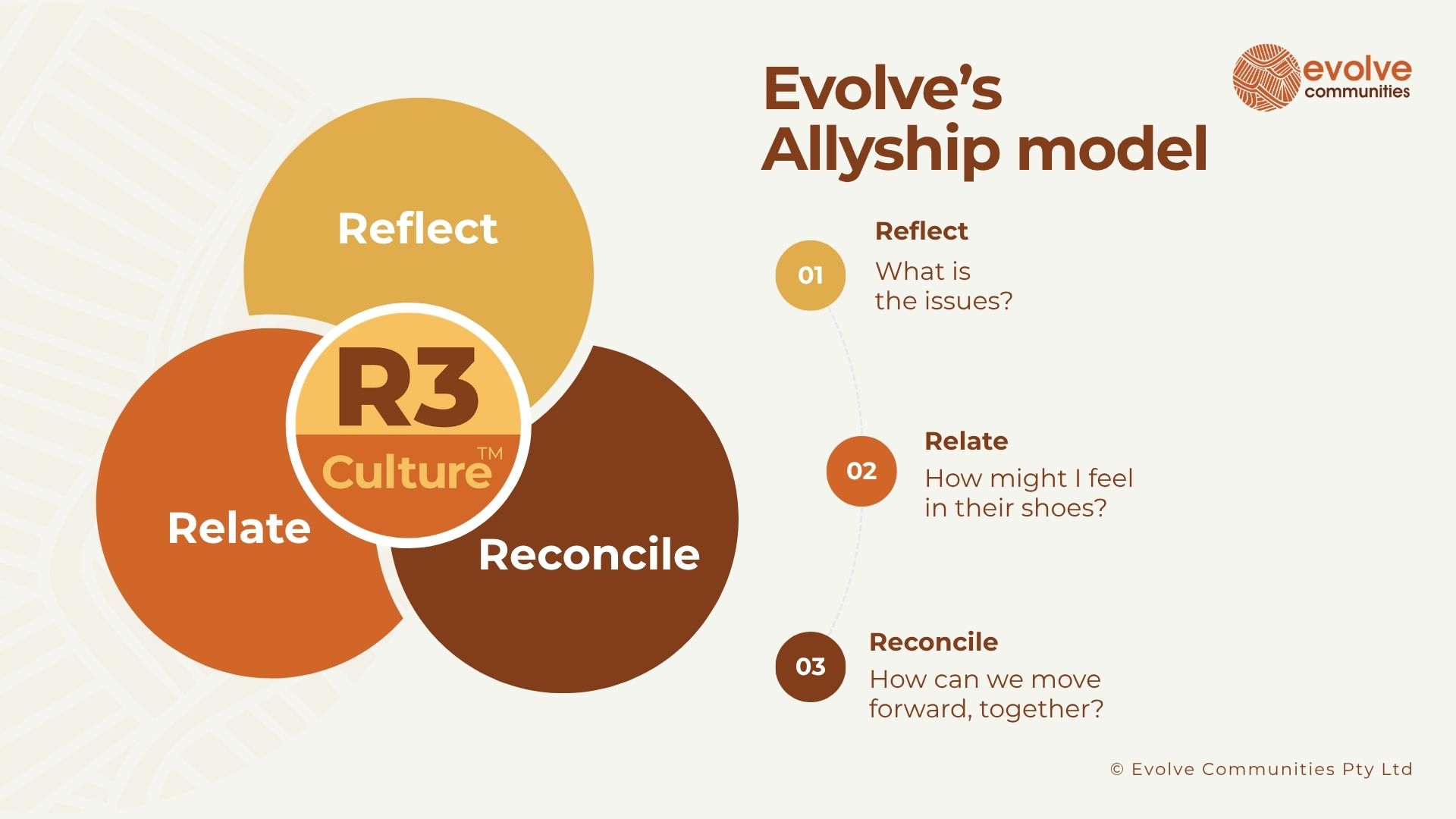
Developed by Aunty Munya Andrews and Carla Rogers, R3 Culture brings together First Nations wisdom and practical Allyship. It helps people navigate difficult conversations, build stronger relationships and move towards meaningful Reconciliation in a way that is honest, human and useful.
By the end of National Reconciliation Week, the Evolve team was still recovering from many conversations, thousands of Australians reached through webinars and workshops, and more cups of tea than anyone could count.
We loved every minute of it.
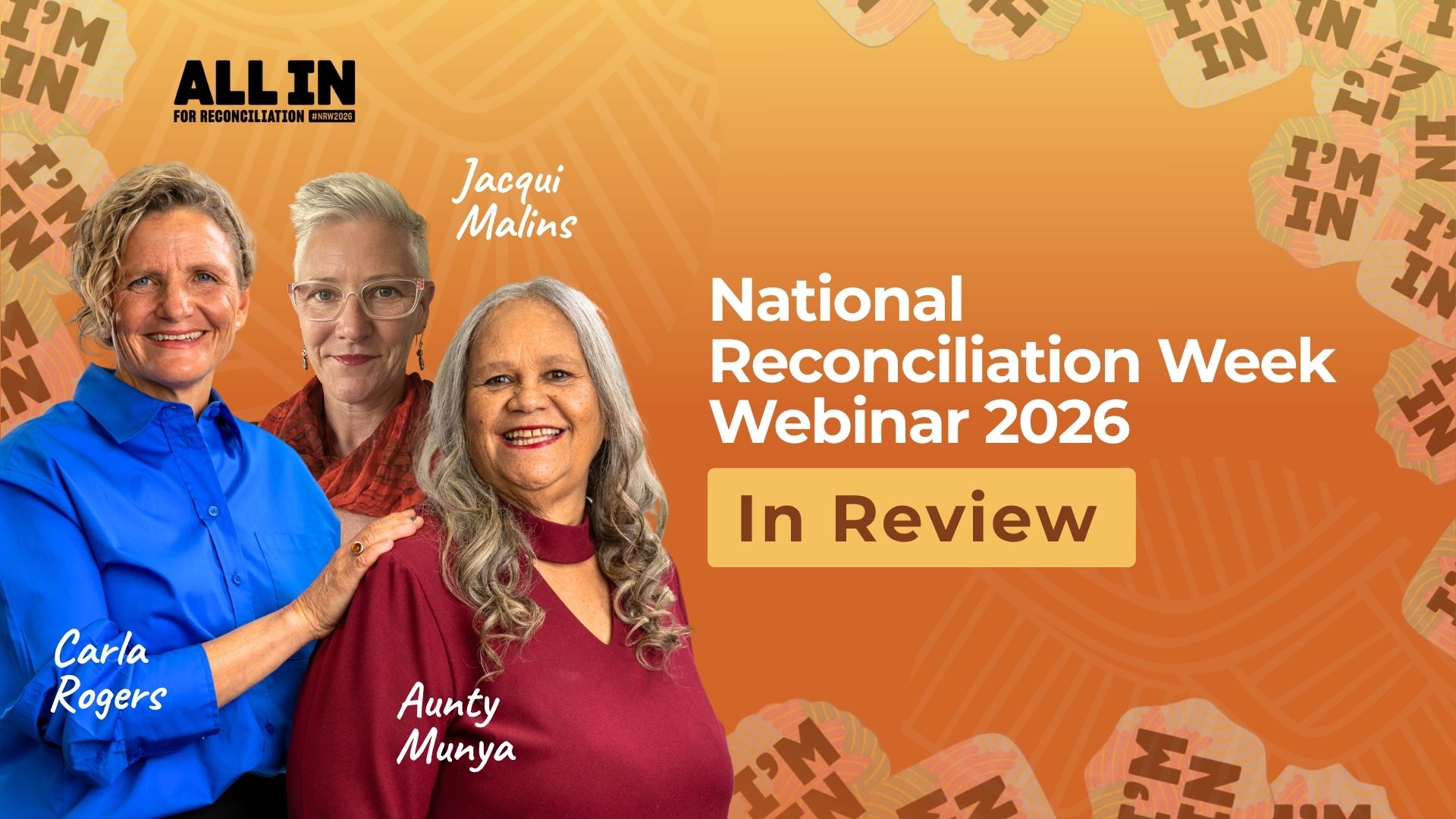
For a glimpse of what the week looked like, watch our National Reconciliation Week in Review video.
Joy belongs in Reconciliation too
As expected, some difficult emotions surfaced.
Fear. Uncertainty. Silence. Helplessness. At times, even outrage.
That is not surprising. Reconciliation asks us to face big things: history, harm, responsibility, truth, shame, courage and the fear of getting it wrong.
But something else emerged throughout the week.
Again and again, webinar participants spoke about the warmth of the conversations, the practical nature of the learning and, perhaps most surprisingly:
Joy.
One of the team’s favourite moments was watching Carla live her best dance life to this year’s NAIDOC theme song, Beds Are Burning by Midnight Oil.
The dancing was enthusiastically encouraged by Aunty Munya, who insists Carla taught Peter Garrett how to dance.
Carla would like the record to show that this is not possible. Peter pre-dates her.
You can see the evidence for yourself here: Carla’s Peter Garrett dance moment.

We share moments like this not to trivialise the conversations we are having, but because they reflect something important.
Allyship and Reconciliation are serious work. But learning from First Nations peoples can also bring joy, belonging, connection and a deeper sense of place.
It reminds us that we can hold difficult conversations while still remaining human. We can challenge ourselves without shaming ourselves. We can take the work seriously without taking ourselves too seriously.
And perhaps that is wisdom in itself.
First Nations wisdom Australia needs
National Reconciliation Week is one important moment in the year. NAIDOC is another. But the deeper work continues long after the dates have passed.
At Evolve, we often describe this work through R3: Reflect, Relate and Reconcile.
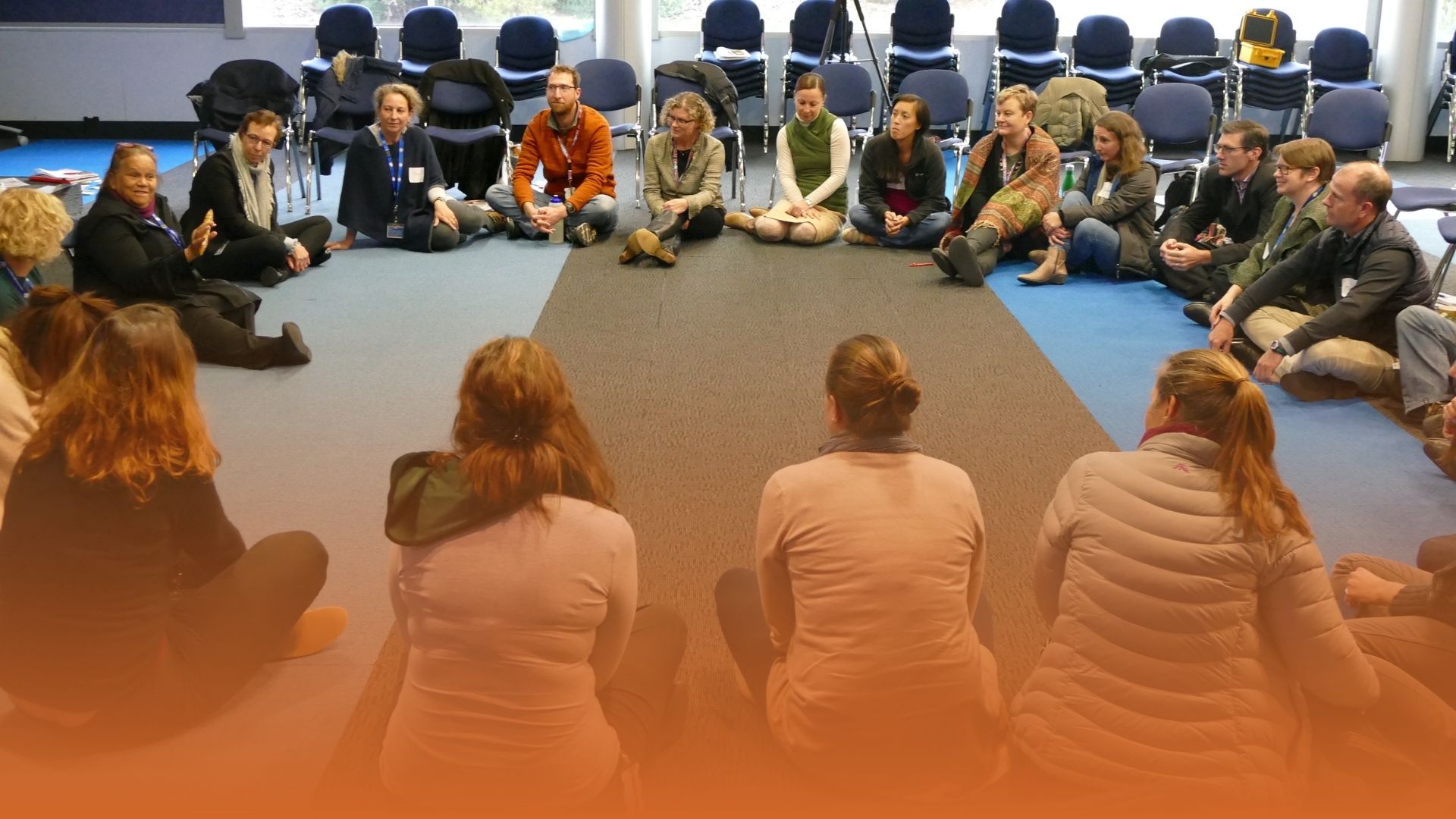
National Reconciliation Week reminded us why difficult conversations matter. First Nations wisdom helps us understand how to have those conversations well.
We will continue to explore the cultural load many First Nations people carry. That load is real, and it matters.
But we also want to explore another truth: First Nations peoples are carrying wisdom Australia needs.
In a time of increasing polarisation, outrage and division, First Nations perspectives offer something profoundly valuable.
This wisdom has shaped Evolve’s work for many years, including our approach to Dadirri, deep listening, Kinship, Country, Dreaming, resilience and ingenuity.
These are not abstract ideas. They are practical teachings that can help people listen more deeply, relate more honestly and take more meaningful action.
That is the work of Reconciliation. And it is work we do better together.

Recent Comments