

A Kinship reflection for difficult conversations
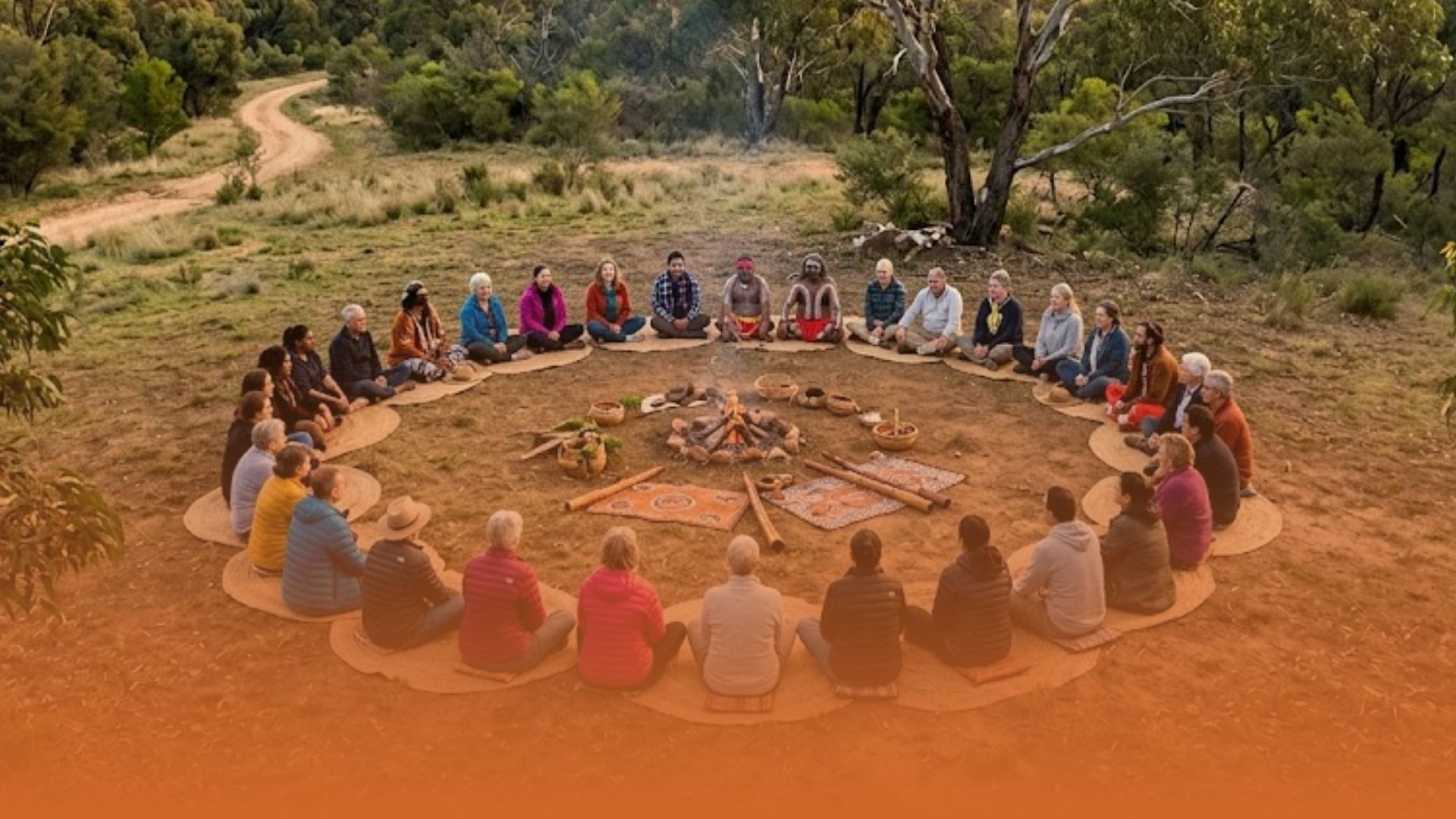
What if no one was outside the circle?
It is a simple question, yet not always an easy one.
Try this. Think of one person, conversation, or situation that feels difficult at the moment. Perhaps someone you disagree with, someone you are struggling to understand, a workplace tension, a community issue, or a conflict that feels stuck.
Now ask yourself: What changes if I remember that we both belong in the circle?
This does not mean that you have to agree, nor that you have to pretend it is easy. Rather, just that conflict does not have to mean disconnection.
From deep listening to Kinship
Ultimately, this Kinship reflection follows naturally from Dadirri: deep listening and quiet, still awareness.
When people try sitting in silence for 60 seconds, many notice that silence was not empty. Instead, it created space to listen.
At Evolve, this sits within our R3 approach: Reflect, Relate and Reconcile.
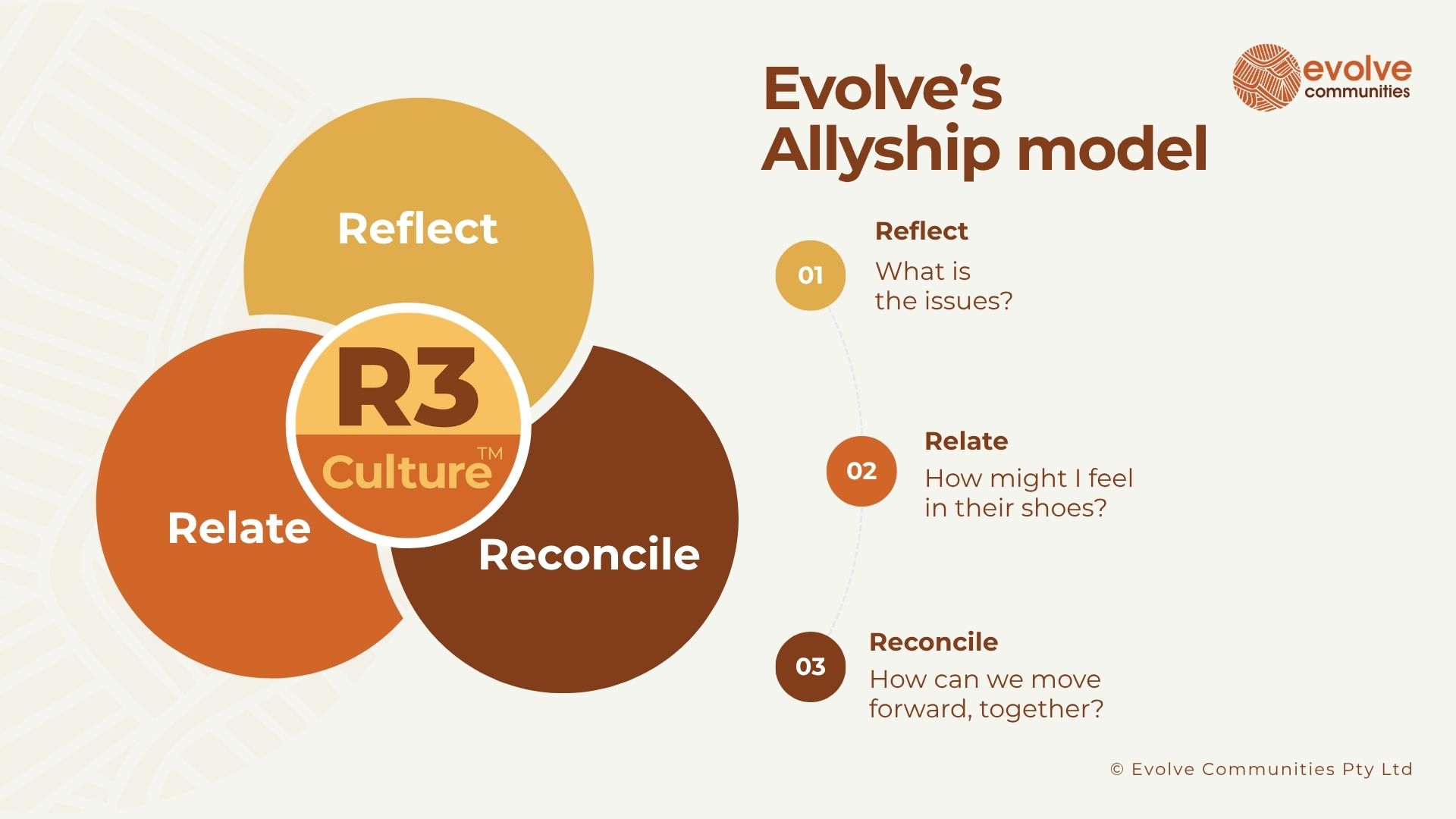
First, we Reflect. We pause. We listen. We notice what is happening in ourselves and around us.
Then, we Relate.
And Kinship has a great deal to teach us about what it means to Relate well.
Country is alive. Country is family.
First Nations cultures understand that people are not separate from each other, or from Country. In fact, Country is not just land on a map. Country is alive, and Country is family. Kinship teaches that everyone has a role and a place, and with that place comes responsibility.
Aunty Munya often asks: “What would change if we saw everyone as family?”
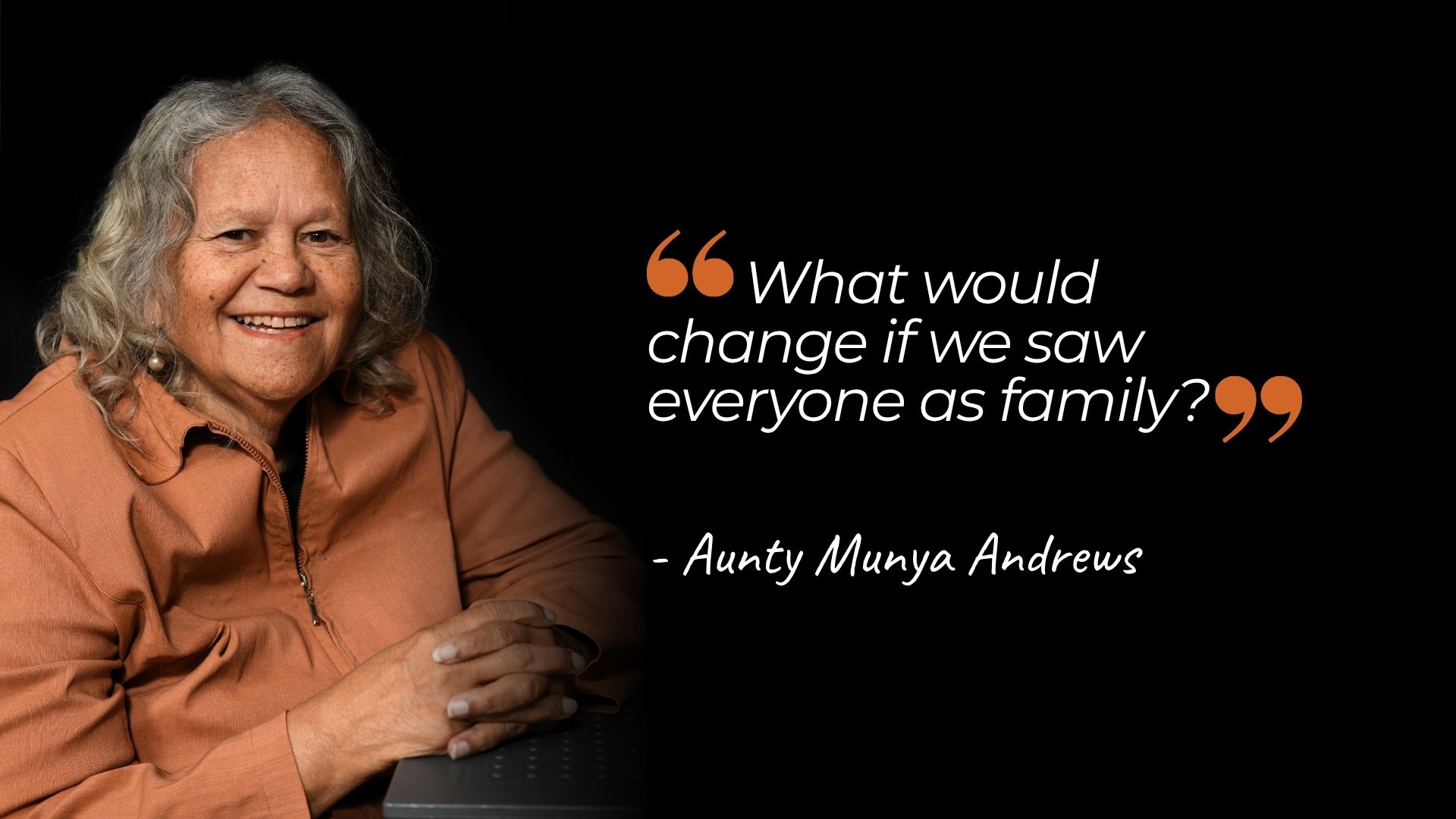
It is a big question, and sometimes, not an easy one. After all, family is not always simple. Families have conflict, communities have conflict, workplaces have conflict, and Nations have conflict.
Therefore, the question is not whether conflict exists. The question is whether we can stay connected enough to listen, relate, and respond with care.
Belonging is more than inclusion language
Aunty Munya also says:
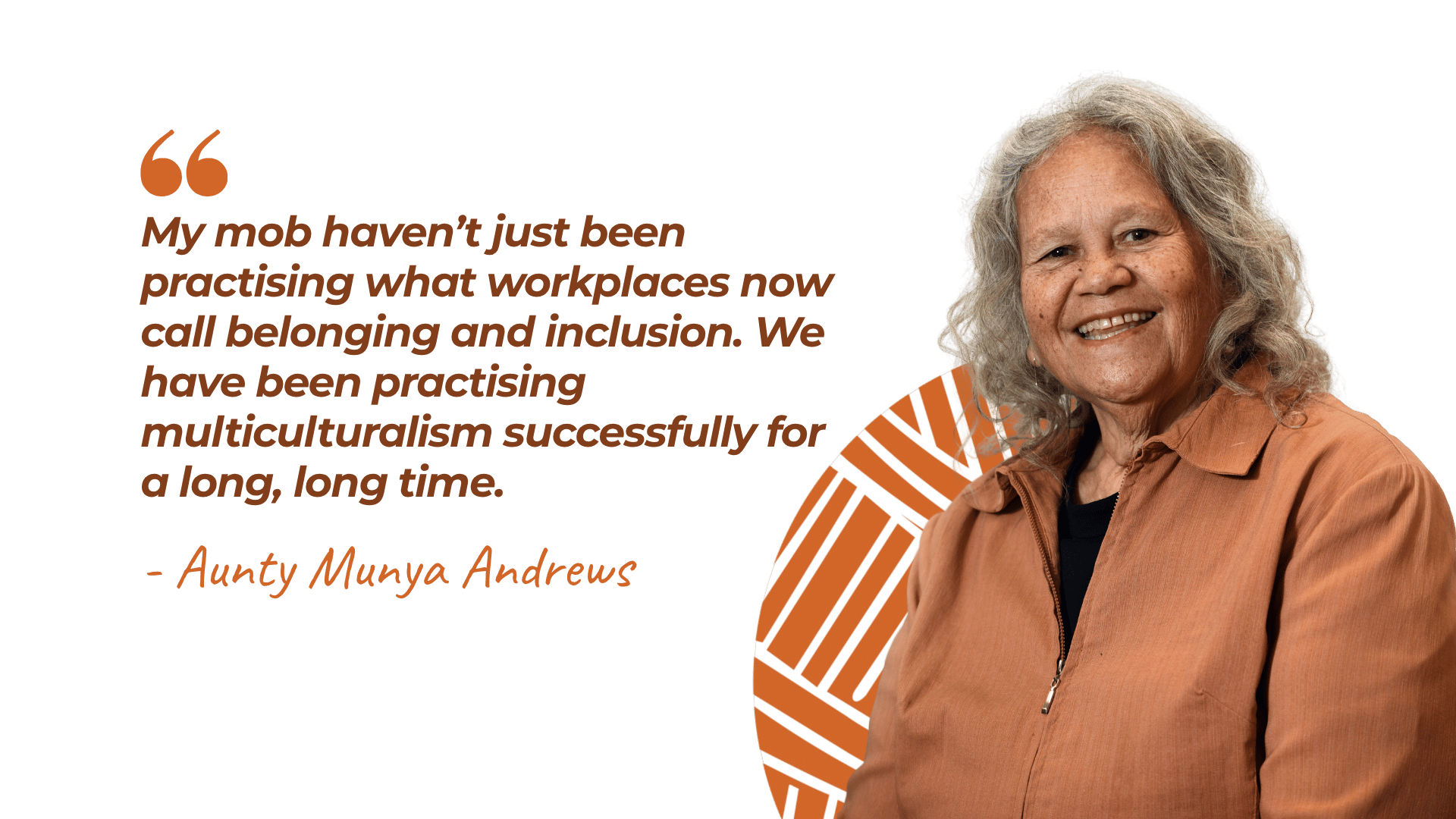
Undeniably, this is one of those lines that cuts through.
Many workplaces are working hard to understand belonging, inclusion, psychological safety, and how to have difficult conversations. While these conversations matter, they are not new conversations. Across this continent, Aboriginal and Torres Strait Islander peoples have long understood that belonging is not sameness.
Instead,
Belonging is Relationship.
Belonging is Responsibility.
Belonging is Place.
Furthermore, belonging is knowing who you are connected to and what that asks of you. Indeed, that is powerful wisdom for workplaces and communities.
Staying in right relationship
We are living in a time where fear-based politics often tells us there is not enough to go around.
Not enough safety.
Not enough opportunity.
Not enough belonging.
It tells us to protect ourselves by pushing others away.
However, a Kinship reflection asks a different question: How do we stay in right relationship?
That does not mean avoiding hard truths. It does not mean agreeing with everyone. Moreover, it does not mean allowing harm.
It means remembering that people are not disposable. It means staying curious enough to ask:
What am I not seeing?
What responsibility do I have here?
What would care look like now?
That is the second step in Evolve’s R3 approach: Relate. First we Reflect. Then we Relate. Then we Reconcile.
Ultimately, Kinship reminds us that Reconciliation is not just an idea. It is a way of being in relationship – with each other, with Country, and with the future we are creating together.

Recent Comments